Overview
The University of Science and Technology – Yemen (UST) recognizes the critical importance of marine ecosystems to Yemen’s food security, biodiversity, and coastal livelihoods.
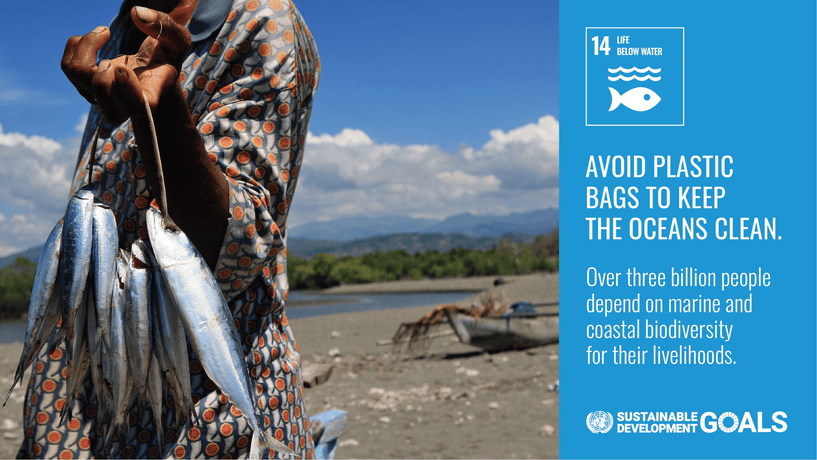
Aligned with SDG 14 (Life Below Water), UST’s strategy focuses on marine science research, environmental education, pollution reduction, coastal resilience, and community engagement.
In 2024, UST expanded its partnerships with local environmental authorities, NGOs, and fishing communities to address the challenges of marine pollution, coastal erosion, and ecosystem degradation — issues intensified by climate change and human pressures on Yemen’s coasts.
UST’s programs link academic research, student engagement, and public initiatives to preserve marine biodiversity and promote sustainable coastal development.
1. Learning and Student Experience
a. Marine and Environmental Education
UST integrates marine conservation and coastal management into the curricula of multiple faculties:
- Faculty of Environmental Sciences and Marine Studies offers courses in:
- Marine ecosystems and biodiversity.
- Coastal resource management.
- Marine pollution control and monitoring.
- Fisheries sustainability and blue economy.
- Faculty of Engineering (Civil and Environmental) teaches modules on:
- Coastal infrastructure resilience.
- Water quality and waste treatment systems.
- Sustainable desalination technologies.
These programs equip students with the knowledge and skills to protect marine life and manage coastal resources responsibly.
b. Student Engagement
Students participate in field-based learning through:
- Marine field trips to Aden Gulf and Al-Buraiqa coast to study coral reefs and water quality.
- Environmental clubs organizing annual “Coastal Cleanup Day” campaigns.
- Workshops and awareness seminars on plastic pollution and marine biodiversity.
In 2024, more than 600 students engaged in marine-related educational and volunteer programs.
2. Research and Innovation
a. Research Areas and Achievements (2023–2025)
UST researchers produced 15+ scientific outputs directly supporting marine and aquatic ecosystem protection, including:
- “Assessment of Microplastic Pollution in Aden’s Coastal Waters” – UST Environmental Journal (2024).
- “Impact of Urban Runoff on Marine Water Quality in the Gulf of Aden” – Faculty of Engineering Research (2024).
- “Coral Reef Health Monitoring Using Remote Sensing Techniques” – UST ICT and Environmental Collaboration Project (2023).
- “Sustainable Aquaculture in Yemen: Challenges and Prospects” – Business and Environmental Policy Research Group (2024).
- “AI-based Prediction of Algal Blooms in Coastal Areas” – UST Computer Science Research (2025).
These studies support marine conservation policy development, pollution control, and sustainable fishing practices.
UST’s applied research advances understanding of marine systems, pollution reduction, and sustainable coastal management — critical to achieving SDG 14 targets.
| Year | Project / Publication | SDG 14 Relevance |
| 2024 | Marine Pollution Assessment in the Red Sea Coast of Yemen — UST Journal of Environmental Studies | Evaluates microplastic and chemical contaminants in coastal waters. |
| 2024 | Impact of Urban Wastewater on Coastal Marine Life in Aden Governorate — Faculty of Environmental Science | Recommends integrated wastewater management to protect marine habitats. |
| 2023 – 2025 | Sustainable Fisheries and Livelihoods for Coastal Communities in Yemen — Faculty of Business and Development Studies | Promotes sustainable fishing and value-chain improvements. |
| 2024 | Marine Biotechnology Applications in Yemen’s Blue Economy — Faculty of Pharmacy | Explores marine organisms for pharmaceutical and biotechnological use. |
| 2024 | Satellite Monitoring of Coastal Erosion and Marine Ecosystem Changes — Engineering Research Group | Uses GIS and remote sensing for marine environmental monitoring. |
These research efforts demonstrate UST’s interdisciplinary contribution to marine science, environmental protection, and coastal community development — central goals of SDG 14.
b. Research Collaboration
UST collaborates with:
- Yemen’s Environment Protection Authority (EPA) – for marine monitoring and pollution assessment.
- Ministry of Fish Wealth and Marine Resources – on coastal resource management research.
- Regional Organization for the Conservation of the Red Sea and Gulf of Aden (PERSGA) – for data sharing and marine training programs.
- UNDP Yemen – on community-based coastal resilience initiatives.
These partnerships ensure that UST’s research translates into practical, policy-relevant outcomes.
3. Sustainable Campus and Environmental Operations
a. Waste Management and Marine Protection
UST has implemented a comprehensive waste management program to prevent marine pollution:
- Full elimination of single-use plastics in campus cafeterias and events (since 2023).
- Recycling stations installed at Aden and Hodeidah campuses to reduce ocean-bound waste.
- Awareness campaigns under the slogan “Our Waste, Our Responsibility” to prevent littering and runoff pollution.
b. Water Efficiency and Pollution Prevention
- Greywater reuse systems installed in campus facilities to minimize wastewater discharge.
- Research on biodegradable waste filtration systems to treat water before release.
- Faculty-led project: “Reducing Chemical Waste Impact from University Labs on Coastal Waters” (2024).
c. Green Campus Design
UST’s Aden campus landscaping uses low-water native species and permeable surfaces, reducing runoff pollution into the sea.
4. Community Engagement and Public Awareness
a. Community Projects
UST’s Community Service Center leads multiple initiatives:
- “Clean Coast, Safe Sea” Campaign (2024):
- Over 200 students and staff joined local fishermen and NGOs in cleaning coastal areas of Al-Tawahi and Little Aden.
- Collected over 2 tons of plastic waste from beaches.
- Featured on local media (Al-Ayyam, 2024).
- Environmental Awareness Workshops for Fishermen:
- Conducted training on sustainable fishing, marine pollution, and waste management.
- Delivered in collaboration with the Ministry of Fish Wealth and Aden University.
- Educational Programs for Schools:
- UST students delivered marine environment lectures to secondary schools near Aden’s coastline, reaching over 78 students.
b. World Oceans Day 2024 Celebration
UST marked World Oceans Day through exhibitions, expert talks, and student research presentations on:
- Marine plastic pollution.
- Coral reef degradation.
- Role of youth in protecting marine life.
This event strengthened UST’s visibility as a national leader in marine education.
5. Partnerships and Policy Engagement
UST’s efforts to advance SDG 14 are enhanced through local, national, and regional partnerships:
- Yemen EPA – joint water-quality monitoring.
- UNDP and PERSGA – technical training for students and staff on marine biodiversity.
- Aden Port Authority – pilot waste segregation and pollution-prevention project.
- Local fishing cooperatives – awareness sessions on sustainable fishing and gear management.
In 2024, UST signed four new MoUs with marine and environmental agencies for collaborative action.
6. Performance Indicators (2024)
| Indicator | 2024 | Progress / Description |
| Marine-related research publications | 15+ | Increased interdisciplinary studies across faculties. |
| Students engaged in marine/environmental fieldwork | 200+ | Participation in cleanup, monitoring, and training. |
| Marine or coastal cleanup campaigns | 6 | Community and student-led programs. |
| Plastic reduction on campus (%) | 70% | Major phase-out achieved in 2024. |
| Partnerships with marine/environmental bodies | 5 | Including EPA, PERSGA, and UNDP. |
| Marine conservation or awareness events | 10 | Climate and ocean-themed events. |
| Waste collected from cleanup drives (tons) | 2.0+ | Documented via UST Community Center reports. |
7. Case Studies
Case Study 1 – “Clean Coast, Safe Sea” Campaign
A flagship UST community project launched in 2024 targeting marine pollution:
- Over 2 tons of waste removed from coastal zones of Aden.
- Collaboration with local NGOs and fishermen.
- Supported by the Faculty of Environmental Sciences and student clubs.
- Resulted in local media recognition and policy engagement.
Case Study 2 – “Coral Health Monitoring via Remote Sensing”
An interdisciplinary research project between the Faculties of Engineering and IT:
- Used drone and satellite data to assess coral bleaching and sedimentation rates.
- Findings shared with the Environment Protection Authority to inform restoration projects.
Case Study 3 – “Zero Plastic Campus” Initiative
- Eliminated single-use plastics in cafeterias and administrative offices.
- Introduced water refill stations, reusable cups, and eco-packaging.
- Reduced estimated plastic waste by 70% in 2024, preventing thousands of bottles from reaching the sea.
8. SDG Linkages
| Linked SDG | Connection |
| SDG 6 – Clean Water and Sanitation | Pollution control and water-quality monitoring. |
| SDG 12 – Responsible Consumption | Plastic waste reduction and recycling. |
| SDG 13 – Climate Action | Coastal adaptation and resilience. |
| SDG 15 – Life on Land | Integrated watershed management. |
| SDG 17 – Partnerships for the Goals | Collaboration with EPA, PERSGA, and UNDP. |
9. Future Outlook (2025 Targets)
- Launch a Marine Research and Sustainability Center in collaboration with EPA and PERSGA.
- Publish at least 10 new marine-related studies annually.
- Expand the Zero Plastic Initiative to all branches.
- Establish a marine biodiversity database for coastal Yemen.
- Develop a Bachelor’s minor in Marine and Coastal Studies.
- Host an International Symposium on Marine Conservation and Climate Resilience (2025).
10. Conclusion
The University of Science and Technology – Yemen demonstrates a strong institutional commitment to SDG 14: Life Below Water through education, research, operational sustainability, and community partnerships.
Despite Yemen’s challenging environmental context, UST continues to lead marine conservation awareness, produce applied research, and engage youth and local communities in practical marine protection efforts.
Its initiatives represent a holistic and verifiable contribution to marine sustainability and climate resilience, making UST a regional model for universities advancing ocean-related SDGs.