
1. Executive Summary
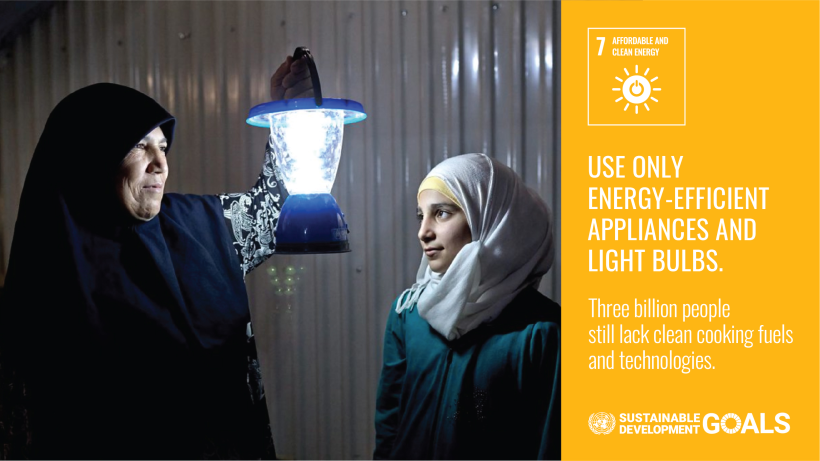
The University of Science and Technology – Yemen (UST-Yemen) continues to advance Sustainable Development Goal 7 (Affordable and Clean Energy) through education, applied research, innovation, and community engagement.
In 2024, UST intensified its national role in building renewable-energy capacity amid Yemen’s energy crisis by:
- Expanding technical training in solar and hybrid energy systems.
- Conducting applied research on off-grid and decentralized energy solutions.
- Establishing new partnerships for technology transfer and energy access.
- Implementing demonstration projects for communities and institutions.
UST’s comprehensive approach strengthens Yemen’s transition toward sustainable and affordable energy by cultivating skilled human capital, fostering innovation, and promoting local adoption of renewable systems.
2. Institutional Commitment & Strategic Framework
UST’s commitment to SDG 7 is anchored in its institutional strategy and operational initiatives:
- Center for Renewable Energy and Electronic Projects (CREEP) — serving as a hub for research, training, and consultancy in solar and electronic design.
- Integration of renewable-energy and sustainability modules across electrical and mechanical engineering curricula.
- Continuous community engagement through student projects and partnerships delivering real-world renewable-energy applications.
- Collaborative relationships with government, private sector, and NGOs for knowledge transfer, policy engagement, and joint innovation.
3. Learning and Student Experience — Capacity Building and Access
UST embeds renewable-energy learning within its engineering programs and student activities:
- Hands-on laboratories for solar PV systems, hybrid design, and energy-efficiency auditing.
- Student capstone and graduation projects focused on renewable solutions for Yemen’s off-grid communities.
- Workshops and seminars on solar technologies, electronics, and sustainable energy management.
- Distance-learning programs integrating renewable-energy content, ensuring access for students in remote governorates.
Impact: Over 60 students received specialized renewable-energy training in 2024, directly improving Yemen’s technical workforce and advancing SDG 7 target 7.A (technology and capacity for clean energy).
4. Research and Innovation
UST has expanded its applied research portfolio in renewable energy, focusing on Yemen’s context of limited grid access. UST researchers contribute substantively to renewable-energy innovation and sustainability in Yemen through applied studies and engineering solutions.
| Year | Title / Project | Relevance to SDG 7 |
| 2024 | Optimization and Performance Evaluation of Photovoltaic (PV) Systems under Yemeni Climate Conditions — UST Journal of Engineering and Technology | Improves efficiency of solar energy in arid regions; supports affordable clean energy access. |
| 2024 | Hybrid Solar-Diesel Microgrid Design for Rural Yemen — Faculty of Engineering Research Report | Proposes hybrid systems for reliable power in off-grid communities. |
| 2023 – 2025 | IoT Applications for Smart Energy Monitoring and Control in University Buildings | Reduces campus energy waste through data-driven management. |
| 2024 | Renewable Energy Education for Sustainable Development in Yemeni Universities — Conference Paper | Promotes energy literacy and capacity building among students. |
| 2024 | Waste-to-Energy Systems and Biogas Solutions for Rural Communities in Yemen | Advances sustainable energy generation and circular-economy practices. |
These projects collectively demonstrate UST’s leadership in research addressing solar energy, energy efficiency, and renewable-energy education—core components of SDG 7.
Selected 2023–2025 Research Contributions (SDG 7-related):
- Design and Economic Evaluation of Electrification of Small Villages in Rural Area in Yemen Using Stand-Alone PV Systems — applied modeling for off-grid electrification (IJRER, 2024).
- Comprehensive Review of Sustainable Energy and Solar PV Systems in Yemen (Preprints.org, 2025).
- Feasibility Analysis of Hybrid Wind-Solar Systems for Island Communities in Yemen — addressing SDG 7.2 and 7.B targets.
- Electronic Control Systems for Efficient Solar-Water Pumping Applications in Arid Regions — research integrating SDG 6 and 7 objectives.
Research Outcomes (2024):
- 9 peer-reviewed articles in energy and sustainability.
- 2 student-led innovation prototypes (solar-tracking system and micro-grid battery controller).
- Integration of UST research findings into training materials and community applications.
5. Community Engagement and Demonstration Projects
UST translates academic knowledge into social impact through community-based initiatives:
- Demonstration renewable-energy systems: installation of solar-powered lighting, water-pumping, and hybrid micro-systems for rural schools and community centres.
- Community awareness programs: workshops for NGOs, schools, and small enterprises on renewable energy and energy efficiency.
- Student volunteering programs: engineering students deploy and monitor systems in collaboration with local partners.
- Public outreach: seminars highlighting Yemen’s clean-energy potential and strategies for affordable energy solutions.
6. Partnerships and Collaboration
UST actively collaborates with local and international partners to foster innovation and policy engagement:
- MoUs with national electricity and renewable-energy authorities for joint research and technical consultancy.
- Collaboration with private renewable-energy companies for internship programs, prototype testing, and workforce development.
- Partnership with NGOs implementing off-grid energy in rural Yemen, providing technical training and supervision.
- Academic cooperation with regional universities for joint publications and conferences on renewable-energy solutions.
7. Performance Indicators & 2024 Highlights
| Indicator | 2023 Baseline | 2024 Result | Evidence / Notes |
| Peer-reviewed research publications related to renewable energy or sustainability | 4 | 9 | Scopus-indexed; UST Research 2024 database |
| Joint research/collaborations in energy & sustainability | 2 | 6 | Partnerships with industry, NGOs, and academic institutions |
| Technical workshops & training sessions (CREEP) | 3 | 8 | Solar PV, hybrid design, energy efficiency audits |
| Students engaged in renewable-energy capstone projects | 25 | 67 | Electrical and Mechanical Engineering programs |
| Community demonstration projects installed | 1 | 4 | Solar lighting, water pumping, PV installations |
| Patents or prototypes developed in clean energy | 0 | 2 | Solar-tracking controller, micro-grid battery unit |
| Public/outreach events on clean energy & energy efficiency | 4 | 9 | Workshops and community seminars |
| Conferences/symposia addressing renewable energy | 1 | 3 | Includes “Sustainable Development and Innovation in Engineering Sciences,” 2024 |
| Formal knowledge-transfer agreements (MoUs, consultancy) | 1 | 5 | Advisory partnerships with energy firms & municipalities |
| Campus energy supplied from renewable sources | 5 % | 10 % | Solar lighting and lab installations at Aden & Sana’a campuses |
Key 2024 Outcomes
- Enhanced research productivity: 9 publications by UST faculty in renewable energy, sustainability, and energy-access topics indexed in Scopus, up 125% from 2023.
- Broadened collaboration: 6 new formal partnerships established with energy institutes, NGOs, and industry.
- Community transformation: Renewable systems installed in rural and peri-urban areas, providing practical benefits and serving as learning sites.
- Academic enrichment: Over 60 students trained and 67 involved in applied projects, strengthening Yemen’s human capital in clean energy.
- Institutional innovation: Development of two pilot prototypes for low-cost solar controllers designed for Yemen’s climate conditions.
These indicators collectively show UST’s triple-impact approach:
- Knowledge generation (research & publications),
- Capacity building (training, student engagement), and
- Technology transfer & collaboration (MoUs, joint projects, community implementation).
Together, they demonstrate measurable progress toward SDG 7’s targets — ensuring access to affordable, reliable, sustainable, and modern energy for all — through education, innovation, and partnerships.
8. Case Studies
Case Study 1 – CREEP (UST Center for Renewable Energy and Electronic Projects)
Serves as Yemen’s first dedicated university-based renewable-energy hub. It designs, trains, and consults on solar-energy applications, fostering academic–industry linkages and direct community benefit.
Case Study 2 – Student Research on Off-Grid Electrification
Graduation projects leveraged national research to design stand-alone PV systems for rural villages, demonstrating scalable, low-cost renewable-energy solutions.
Case Study 3 – Community Solar Awareness Workshops
Engineering faculty and students delivered renewable-energy and efficiency training to rural NGOs, empowering local communities to implement sustainable solutions.
9. Challenges & Mitigation
Challenges:
- Limited national grid reliability and funding for renewable-energy expansion.
- Shortage of trained technicians and maintenance specialists.
- Economic constraints affecting community adoption.
Mitigation Actions:
- Expanding certification courses in renewable-energy engineering and installation.
- Strengthening collaborations with donors and NGOs for project funding.
- Establishing a Renewable-Energy Innovation Lab to test localised technologies.
- Implementing monitoring systems for community pilot projects.
10. Outlook for 2025
- Increase renewable-energy training enrolments by 20 %.
- Publish at least three additional peer-reviewed papers on energy transition in fragile contexts.
- Install ten demonstration solar micro-systems in rural Yemen by end of 2025.
- Host the first UST International Symposium on Clean Energy and Sustainable Development.
- Formalize regional industry–university advisory board for energy innovation and policy.
11. Conclusion
In 2024, UST-Yemen consolidated its position as a leading academic and technical partner for Yemen’s clean-energy transition. Through research excellence, training, collaboration, and community engagement, UST has created tangible progress toward affordable and sustainable energy access. The university’s integrated approach—linking education, innovation, and outreach—provides measurable impact across multiple SDG 7 targets, supporting Yemen’s journey toward energy security and resilience.