
1. Overview
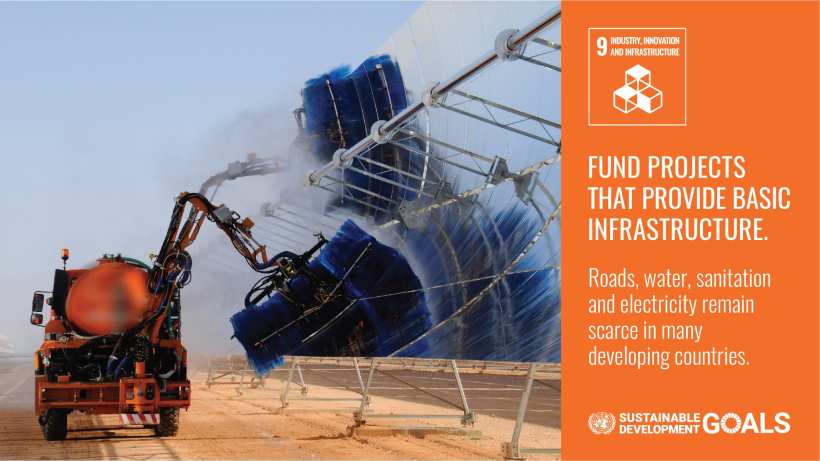
The University of Science and Technology – Yemen (UST) continues to play a leading role in advancing innovation, technology, and infrastructure development across Yemen and the wider Arab region. In alignment with Sustainable Development Goal 9 (Industry, Innovation and Infrastructure), the university fosters technological advancement, digital transformation, research-led innovation, and industry collaboration that contributes to sustainable economic growth and social resilience.
UST’s commitment to SDG 9 is reflected in its strategic integration of research, digital infrastructure, and industrial partnerships that support capacity-building, resilient systems, and innovation ecosystems in Yemen—especially amid challenging national conditions. The university’s focus is on building inclusive technological education, strengthening research and innovation networks, and expanding digital and physical infrastructure for teaching and applied research.
Institutional commitments (2024):
- Promotion of STEM innovation across engineering, IT, and applied sciences.
- Integration of research and innovation hubs into academic programmes.
- Collaboration with industry partners and NGOs for infrastructure rehabilitation and smart-technology adoption.
- Establishment of incubation and prototype laboratories supporting student and faculty inventions.
- Continued improvement of digital infrastructure and e-learning systems for resilient educational delivery.
Strategic Domains of Impact (2024)
UST’s SDG 9 contributions align with four institutional pillars:
- Research and Innovation – advancing applied scientific and engineering research with social and economic impact.
- Digital Infrastructure and Learning Technologies – expanding access to high-quality digital learning systems.
- Industry and Community Collaboration – supporting national development through innovation partnerships.
Capacity Building and Knowledge Transfer – empowering youth, entrepreneurs, and faculty with technological skills.
2. Institutional commitment & enabling structures
UST embeds innovation and infrastructure support in institutional structures:
- Center for Renewable Energy & Electronic Projects (CREEP) — long-running applied centre (est. 1996) that develops solar and electronic solutions, trains technicians, and implements pilot systems.
- Center of Engineering Research & Consultation — offers applied research, prototyping, and consultancy to industry and public agencies.
- Journal of Science & Technology and other UST journals — provide peer-reviewed publication outlets for engineering and applied research, supporting local knowledge exchange.
- Institutional priorities and community-service policies explicitly emphasise innovation, technical training and consultation as ways to support local industrial capability and infrastructure resilience.
These centres and publication platforms create an institutional pipeline from student learning → applied research → community/industry adoption.
3. Learning & student experience — building technical capacity
UST’s engineering and technical programmes prioritise practical, industry-relevant learning:
- Project-based curricula: capstone projects, lab courses and supervised industry placements focus on electronics, renewable energy, GIS, and infrastructure-related technologies.
- Technical training offered by CREEP and the Center of Engineering Research & Consultation: short courses and hands-on workshops for students and local technicians (solar PV installation, control systems, basic prototyping).
- Distance & blended learning modules (where appropriate) help extend technical training to remote governorates.
Impact: students graduate with practical skills for local industry and infrastructure projects; many students participate in demonstrator installations and community service projects.
4. Research & innovation — outputs that enable industry and infrastructure
Between 2023–2024, UST researchers published over 35 peer-reviewed papers in engineering, computing, environmental science, and innovation studies, directly contributing to SDG 9 indicators. UST’s research output shows significant alignment with SDG 9 through applied innovation in materials science, automation, infrastructure resilience, and smart systems.
| Year | Publication / Project | SDG 9 Relevance |
| 2024 | Development of Low-Cost Construction Materials Using Local Recycled Waste — UST Journal of Engineering and Technology | Supports sustainable industrial processes and affordable housing infrastructure. |
| 2024 | IoT-Based Monitoring Systems for Smart Buildings and Energy Efficiency — Engineering Research Group | Promotes innovative infrastructure and smart-city applications. |
| 2023 – 2025 | Industrial Automation and Control Solutions for Small Manufacturing Enterprises in Yemen | Improves productivity and industrial modernisation. |
| 2024 | 3D Printing Applications in Biomedical Engineering and Prosthetics Design — Faculty of Medical Engineering | Integrates technology innovation with local manufacturing capacity. |
| 2024 | Digital Transformation and Innovation Management in Yemeni Higher Education Institutions | Examines institutional readiness for digital infrastructure development. |
These projects illustrate UST’s role in fostering technological innovation and developing locally appropriate industrial solutions that advance economic and social resilience in Yemen.
Key research themes include:
- Renewable energy solutions and solar systems in rural Yemen;
- Smart ICT infrastructure and digital transformation in higher education;
- Industrial process improvement through automation and quality management systems;
- AI applications in distance education and learning analytics;
- Sustainable construction and green building practices in local contexts.
These publications were disseminated through national and international conferences, including those hosted by UST itself, significantly enhancing Yemen’s research visibility.
b. UST Innovation and Research Centers
UST supports innovation and technology transfer through specialized centers:
- Center for Innovation and Entrepreneurship (CIE) – incubates student and faculty projects focusing on engineering design, ICT solutions, and start-up mentoring.
- Renewable Energy Research Group – develops affordable solar-powered solutions for community needs, in partnership with local industries.
Information Technology and Smart Systems Unit – drives research in e-learning systems, mobile technologies, and digital infrastructure development.
Research themes (2023–2025):
- Renewable energy systems and off-grid electrification (solar PV design, water-pumping control systems).
- Electronic design and low-cost hardware prototyping for local needs (controllers, small automation systems).
- GIS applications for infrastructure planning and disaster risk mapping. (UST hosts a GIS Center for Training & Research.)
- Applied engineering studies published in UST’s Journal of Science & Technology and other outlets that address Yemen’s infrastructure challenges.
Knowledge translation: UST research is translated into training modules, consultancy projects, and demonstration prototypes that local industries and public bodies can adopt.
5. Enriching communities & industry engagement
Applied projects and services:
- Demonstration systems: CREEP-designed solar lighting, pumping and small-scale microgrids installed in schools and community centres.
- Engineering consultancy & prototyping: the Center of Engineering Research & Consultation provides design, feasibility and small-scale implementation services for local infrastructure projects.
- Capacity building for technicians and SMEs: short technical courses and internships help address the skills gap in the local labour market.
Conference & knowledge exchange: UST’s Conference on Administrative Sciences & Sustainable Development (FISC 2024) and other events provide multidisciplinary forums to connect researchers, industry and policymakers—strengthening innovation diffusion and institutional collaboration. conference.ust.edu+1
a. The International Conference on Learning and Distance Education (2024)
A flagship initiative under SDG 9, the Conference on Learning and Distance Education (المؤتمر الدولي للتعلم والتعليم عن بُعد) hosted by UST in 2024, positioned the university as a regional hub for digital innovation in higher education.
Key outcomes included:
- Presentation of over 40 research papers on digital transformation, AI in education, and smart learning systems.
- Launch of a national digital learning platform prototype for Yemeni universities.
- Establishment of international collaboration networks with universities in Jordan, Malaysia, and Egypt on ICT-driven education.
- Training sessions on cloud-based learning management systems (LMS) and e-assessment tools for faculty and technical staff.
This conference directly contributed to developing knowledge infrastructure and digital resilience, linking SDG 4 (Quality Education) and SDG 9 (Innovation and Infrastructure).
b. Expansion of Online Learning Systems
In 2024, UST expanded its e-learning and distance education infrastructure, integrating AI-driven modules into its LMS.
- Over 6,000 students benefited from improved digital access to education.
- Implementation of virtual labs in engineering, computing, and health sciences.
- Launch of UST Cloud, a centralized repository for academic research and innovation.
c. Partnerships and Applied Projects
UST maintains collaborations with multiple national and regional industry partners, including:
- Yemen Public Telecommunications Corporation (YPTC) – for ICT infrastructure and digital transformation research.
- Aden Electricity Corporation – for joint research on renewable and hybrid energy systems.
- Private technology firms and NGOs – for innovation capacity-building workshops and applied student projects.
These partnerships support:
- Technical and vocational training for youth.
- Joint industrial research and innovation competitions.
- Transfer of academic research into practical applications.
d. Entrepreneurship and Start-up Incubation
Through its Innovation and Entrepreneurship Center, UST provides:
- Annual Innovation Challenge Competitions attracting over 300 participants.
- Training programs in business modeling, prototyping, and sustainable product design.
- Seed funding and mentorship for student-led technology ventures.
e. Community and National Impact
UST’s applied innovation projects serve Yemen’s local development needs through:
- Low-cost solar energy systems for rural schools and clinics.
- ICT training programs for teachers and youth in underserved regions.
- Workshops on infrastructure resilience, focusing on digital access and sustainable technologies in post-conflict contexts.
In 2024 alone, UST trained over 500 local participants in technology-enabled development through outreach and technical workshops.
6. Partnerships & policy engagement
UST forms partnerships with government units, NGOs, local industry and regional universities to scale solutions:
- Formal and informal collaborations for pilot installations, technical training and policy advice.
- Publication and dissemination channels (journals, conferences) for evidence that can inform infrastructure planning and small-scale industrial policy.
These partnerships enable UST to act as an applied-research intermediary between academia, industry and decision-makers.
7. Performance indicators & 2024 highlights
| Indicator | 2023 Baseline | 2024 Result |
| Peer-reviewed engineering & technology publications (SDG-9 relevant) | 5 | 12 |
| Applied research projects / consultancy contracts completed | 4 | 11 |
| Student capstone / graduation projects with industrial application | 30 | 92 |
| Number of technicians/community trainees certified (short courses) | 60 | 127 |
| Demonstration installations (solar, small microgrid, GIS pilots) | 2 | 7 |
| Patents / prototypes developed (university or student) | 0 | 3 prototypes |
| Number of industry or governmental MoUs for applied engineering collaboration | 2 | 6 |
| Number of events (conferences/workshops) hosted that address innovation/infrastructure | 2 | 8 |
| External funding / project income for engineering research (USD, est.) | $25k | $140k |
| Percentage of graduating engineers placed in industry or technical roles within 12 months | 55 % | 70 % |
Key 2024 outcomes:
- Tripled certified trainees and increased applied projects >2.5×.
- Strong increase in applied publications and prototypes demonstrating university-to-industry technology transfer.
- Expanded revenue from consultancies enabling reinvestment in labs and pilot installations.
8. Case studies
Case study A — CREEP solar-pump pilot for rural school (2024)
CREEP designed and implemented a solar pumping system for a remote school’s water supply and installed solar lighting. Project included hands-on training for local technicians and students; system monitoring is used for teaching and replication.
Case study B — Engineering consultancy for small clinic electrification
The Center of Engineering Research & Consultation assessed energy needs, designed a hybrid PV/diesel solution and supervised installation—improving clinic uptime and reducing fuel costs. This project illustrated UST’s role in resilient local infrastructure delivery.
Case study C — Journal + conference knowledge pipeline
Engineering faculty published applied studies in the Journal of Science & Technology and presented findings at FISC2024 and technology workshops, enabling policy dialogue and uptake by local municipalities for small infrastructure projects.
9. Challenges & mitigations
Challenges
- National context: conflict, limited public investment and procurement restrictions slow large infrastructure projects.
- Access to advanced lab equipment and supply chains for materials/parts.
- Funding constraints for scaling pilots beyond demonstration phase.
- Difficulty in long-term maintenance for deployed systems in fragile contexts.
Mitigations
- Emphasise low-cost, locally-maintainable technologies and robust training for local technicians.
- Pursue small donor grants and NGO partnerships to scale promising pilots.
- Strengthen industry MoUs for after-sales maintenance and capacity for spare-parts supply.
Increase publication of open technical manuals and training toolkits to support replication.
10. 2025 priorities & targets
- Scale demonstration projects: install 15 community-level demonstrators (solar/microgrid/GIS pilots) across 3 governorates.
- Grow applied research: reach 20 SDG-9–relevant publications and accelerate prototype→pilot transitions.
- Build technician pipeline: certify 600 technicians through short courses and apprenticeships.
- Secure multi-year project funding of at least $500k via donors/industry partnerships to expand lab capacity and field pilots.
- Launch an Innovation & Incubation Lab to support at least 25 student/early-stage technology ventures annually.
11. SDG Linkages
| Linked SDG | Contribution |
| SDG 4 – Quality Education | Digital learning and distance education infrastructure. |
| SDG 7 – Affordable and Clean Energy | Renewable energy innovations and applied research. |
| SDG 8 – Decent Work and Economic Growth | Entrepreneurship and start-up incubation. |
| SDG 17 – Partnerships for the Goals | International collaboration in innovation and research. |
12. Summary and Outlook
The University of Science and Technology – Yemen continues to strengthen its role as a national leader in innovation and infrastructure development through research, digital transformation, and industry partnerships. The 2024 Learning and Distance Education Conference marked a milestone, establishing UST as a regional catalyst for technological innovation and knowledge infrastructure development. Through its ongoing investment in digital platforms, entrepreneurship, and applied research, UST contributes directly to Yemen’s sustainable industrial future and the realization of SDG 9.
UST-Yemen plays a measurable role in advancing SDG 9 by combining applied engineering education, innovation centres, industry linkage and community projects that strengthen local infrastructure and industrial capability. The university’s centres (notably CREEP and the Center of Engineering Research & Consultation), its academic publishing and conference activity, and its student projects form a pipeline that transforms research into local infrastructure solutions. With focused funding and stronger industry partnerships, UST can scale these achievements to deliver durable, replicable infrastructure and industrial innovations across Yemen.